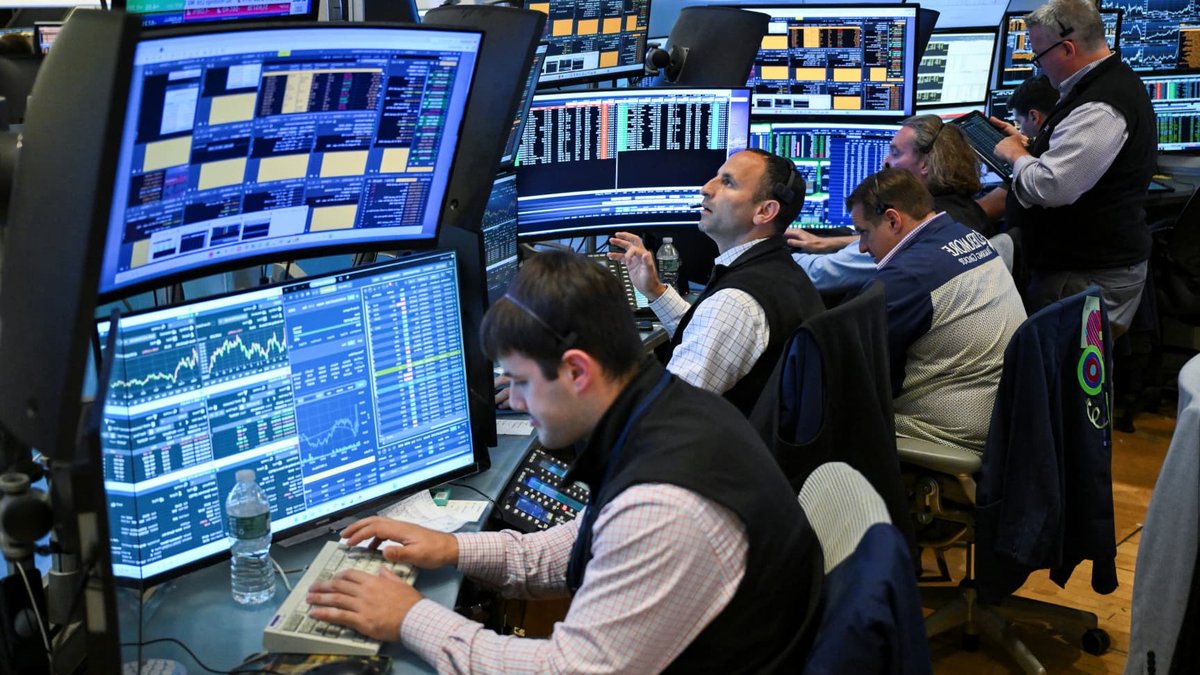
Stocks experienced a difficult week as investors handled a volatile mix of geopolitical risks and corporate earnings reports. The S&P 500 declined 0.6%, and the tech-heavy Nasdaq fell 2.1%, marking the benchmark’s second consecutive weekly loss. Several factors contributed to this market downturn, including renewed fears about oil supplies and shifting expectations regarding artificial intelligence spending.
Rising tensions in the Middle East drove oil prices to their highest levels in months. U.S. benchmark West Texas Intermediate crude jumped more than 8%, while international Brent crude surged nearly 10%. The spike began after President Donald Trump warned that Iran would pay “many times over” for the deaths of three U.S. service members. By Thursday, Brent crude briefly topped $100 a barrel for the first time since before a previous ceasefire agreement.
The conflict appeared to expand when Houthi militants attacked Saudi oil tankers in the Red Sea. This escalation pushed the 10-year Treasury yield to its highest level since January 2025. With the Federal Reserve meeting next week, the markets are now pricing in a nearly 35% probability of a quarter-point increase in rates, up from just a 13% chance one week ago.
AI spending expectations shift
Artificial intelligence spending has become a major focus for investors, who are now demanding clearer returns on massive capital expenditures. Alphabet, a Club holding, reported better-than-expected revenue and cloud growth, yet its shares fell 7% on Thursday. Investors reacted negatively to the company’s decision to increase its capital expenditure outlook to between $195 billion and $205 billion. With free cash flow turning negative, Wall Street is becoming skeptical that hyperscalers can sustain such heavy investment without immediate financial payoff.
Intel offered a contrasting report, delivering its strongest quarterly revenue growth since 2011 on a 59% jump in data center revenue. The company announced cybersecurity firm Fortinet as its first named foundry customer, though other major partnerships remain unconfirmed. Intel shares closed down nearly 8% for the week, while Alphabet fell 7.8%.
It is worth noting that this market reaction mirrors the skepticism seen during the dot-com bubble, where investors eventually punished companies that burned cash without generating sustainable profits. Unlike the speculative frenzy of the late 1990s, current market participants are more focused on tangible cash flows and operational efficiency.
Earnings reports reveal mixed results
General Electric’s spin-off, GE Vernova, served as a prime example of why investors need to look beyond the headline numbers. Shares fell roughly 8% on Wednesday after the company missed Wall Street’s earnings-per-share estimates. This sharp decline highlights the challenges companies face in a high-interest-rate environment where operational costs and debt servicing eat into margins.
Investors are increasingly looking at how these companies manage expenses in a high-rate environment. Weight-loss drugs may help pets shed pounds in a similar fashion to how investors hope to see weight loss in corporate balance sheets. The scrutiny over spending is real, and the market is sending a clear message about the importance of efficiency.


