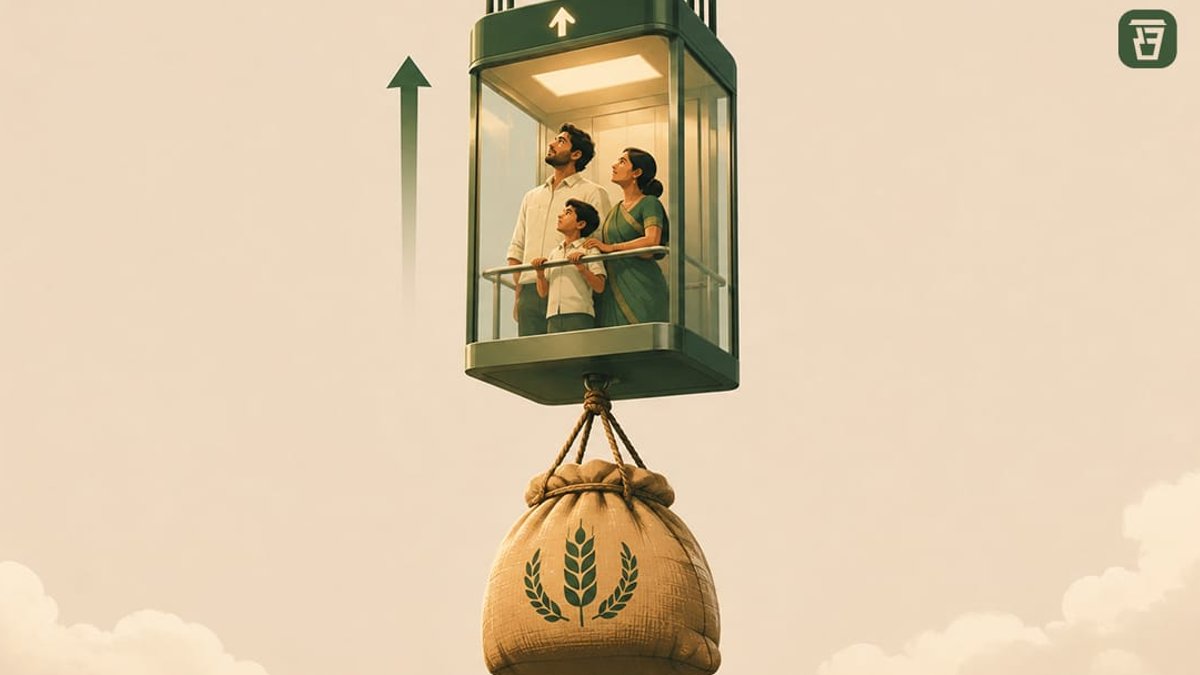
According to a recent World Bank report, India’s poverty rate has significantly decreased, with the percentage of the population in extreme poverty dropping from 27.1% in 2011 to 2.6% in 2023, yet the country continues to provide free foodgrains to over half its population through the Public Distribution System (PDS).
The PDS has its roots in colonial times when the British government introduced a formal rationing system in 1939. It evolved into a social safety net after Independence and was further strengthened in 1965 with the establishment of the Food Corporation of India (FCI) and the Agricultural Prices Commission.
A System Rooted in History
The PDS was revamped in 1992 and overhauled in 2013 with the National Food Security Act (NFSA), which made access to subsidized foodgrains a legal right. The Act requires the government to cover up to 75% of the rural population and 50% of the urban population, totaling roughly 81 crore people.
Since January 2023, beneficiaries have been receiving their monthly foodgrain entitlements entirely free under the PM Garib Kalyan Anna Yojana. This amounts to 5 kg per person or 35 kg per household, depending on their category.
Read Also: Vande Bharat trains drop Tatkal quota
The government’s reasoning for covering such a large share of the population is twofold. First, it’s better to include a few households that can afford foodgrains than risk leaving out a family that genuinely needs them. Second, the World Bank’s poverty measurements are based on household consumption during a specific period, which may not reflect a family’s financial situation throughout the year.
A daily-wage worker, for instance, might earn enough to stay above the poverty line when surveyed but could face financial hardship if they lose work or incur unexpected expenses. Economists refer to these fluctuations as transient poverty.
The Challenges of Broad Coverage
Removing families from the scheme can be politically expensive, as households must be actively removed from the beneficiary list. A government-commissioned survey found that around 13% of people receiving free foodgrains were ineligible, with figures exceeding 35% in West Bengal, Tripura, and Tamil Nadu.
This broad coverage comes at a cost, ultimately borne by taxpayers. The funds allocated for this program could otherwise be directed towards infrastructure, employment generation, and other development needs.
A High-Level Committee recommended reducing NFSA coverage to around 40% of the population while increasing the monthly foodgrain allocation for poor households from 5 kg to 7 kg per person. This approach, combined with better targeting, could help the poorest households save more on food and allocate resources to other essentials.
Read Also: Peru grants legal rights to native stingless bees
Cash assistance could complement this system, reducing the costs associated with storing and transporting grain. However, fixed cash payments may lose value when food prices rise, and remote areas may lack reliable markets. A mixed approach, tailored to local conditions, might be more effective.
The Census and Targeting Challenges
Accurate population data is essential for effective targeting. However, the Census, due in 2021, has faced significant delays. Enumeration has only recently begun and will take several more months to complete.
Even with updated figures, challenges remain. The 2015 High-Level Committee recommended reducing NFSA coverage to 40% of the population, believing the current scope is too broad. It also suggested increasing the monthly foodgrain allocation for the poorest households from 5 kg to 7 kg per person, aligning with previous entitlements for those below the poverty line.
Towards a More Efficient System
The government’s reliance on the PDS as an outlet for procured grains is another factor. Reducing the program could lead to excess stocks, requiring costly storage. To avoid this, the government might cut back on procurement, potentially harming farmers in states like Punjab and Haryana and inviting political backlash.


