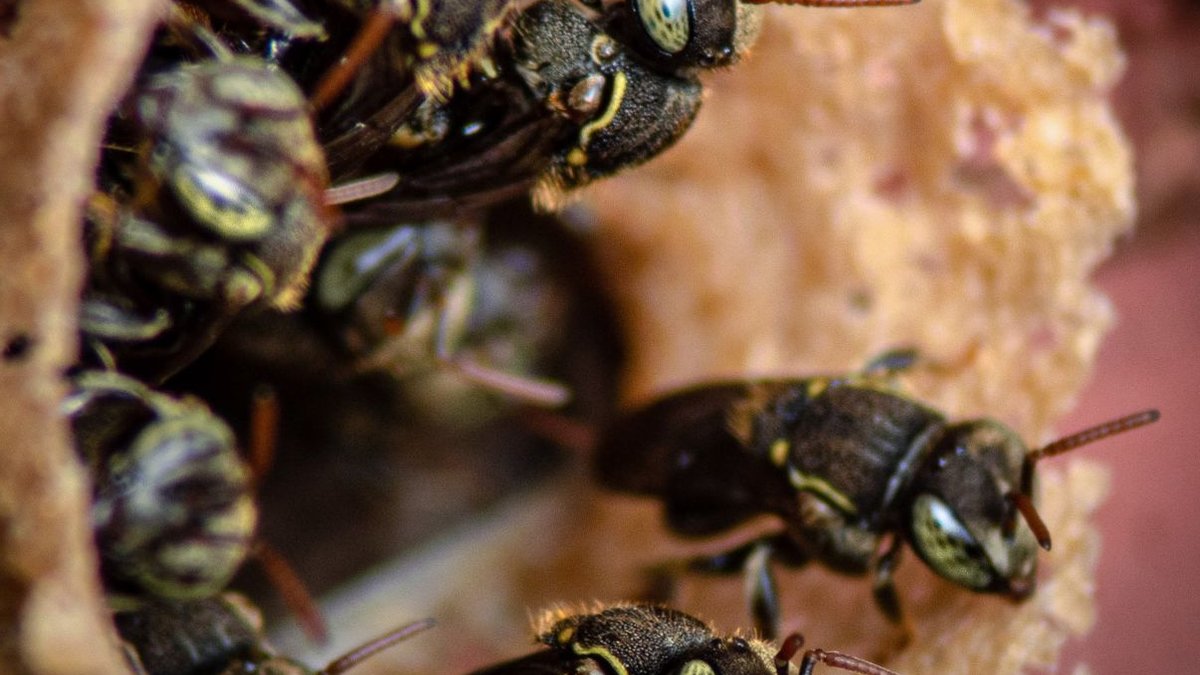
Two local governments in Peru granted native stingless bees legal rights, making them the first insects in the world to receive such recognition. Two local governments granted native stingless bees the right to exist, reproduce, thrive, and maintain a healthy habitat. So, if someone destroys their habitat or engages in activities that threaten their survival, conservation groups and authorised representatives can take them to court on their behalf.
There’s an interesting legal concept at play here. It’s called legal personhood. While a person in everyday language refers to a human being, in law, the definition is broader. A legal person can be any entity the law recognizes as having rights and obligations-such as a company, an animal, or even nature itself.
Companies, for example, cannot physically walk into a courtroom or sign documents, but they can own property, enter contracts, and be sued. The law treats them as separate legal entities, with directors or authorized representatives acting on their behalf. This principle applies not only to businesses but also to nature or animals.
India’s Legal Rights for Animals
In 2019, India took a significant step in this direction. The Punjab and Haryana High Court ruled that the entire animal kingdom-including birds and aquatic life-should be treated as legal entities with rights, duties, and liabilities. The judgment also directed citizens to act as guardians for animals and laid down several guidelines to protect them, including giving bullock carts the right of way.
So, technically, if you’re driving through Haryana in your Thar and encounter a bullock cart, remember, legally, you have to let it pass first. The ruling reflects a growing acknowledgment that non-human entities can hold legal standing, similar to the bees in Peru.
Read Also: RBI Measures Ease Rupee Pressure Amid Global Dollar Strength
India’s Gaming Industry Struggles for Blockbuster Success
India’s gaming industry has made notable contributions to global gaming projects, such as Rockstar Games’ Bengaluru studio, which helped develop GTA VI. However, the country has yet to produce its own open-world blockbuster. Funding challenges and market habits are key barriers.
India’s gaming sector has traditionally depended on mobile advertising rather than premium sales or in-game purchases. A 2021 PwC study revealed that 74% of Indian gamers preferred watching ads over making in-app purchases, making it difficult for developers to finance large-scale projects like open-world games.
Unlike mobile games, which generate revenue quickly through ads, premium PC or console games rely on upfront sales or in-game purchases—models that do not align well with India’s gaming habits. This creates a funding gap for studios aiming to build immersive, open-world experiences.
Some Indian studios are exploring alternative strategies. Chennai-based Ayelet Studio is developing Son of Thanjai, an open-world action-adventure set in an alternate-history version of the Chola Empire. The game seeks to blend Indian history with global appeal, potentially attracting international markets where premium pricing is more common.
Other studios, like Pune-based Nodding Heads Games, have already demonstrated that Indian-made games can succeed globally. Their title Raji: An Ancient Epic, inspired by Indian mythology, reached two million players without relying on ads, proving demand for original Indian content.
Read Also: Scotch Whisky Imports Halted in India-UK Trade Dispute
Challenges and Paths to Original Open-World Games
The next challenge is scaling these successes into larger, open-world projects. Studios may need to target international audiences, secure publisher backing, or adopt subscription models to bridge the funding gap. For now, India’s gaming talent remains focused on co-development, but the potential for original blockbusters remains untapped.
The 2019 Punjab and Haryana High Court ruling on animal rights introduced enforcement mechanisms. These officers gained the power to inspect facilities—such as slaughterhouses, animal shelters, and private homes—where animals were kept, ensuring adherence to the new legal protections.
Instead, they were reclassified as legal entities with inherent rights, meaning their welfare could not be subordinated to commercial or personal interests.
Bullock Carts and Legal Recognition of Non-Human Life
The judgment explicitly stated that bullock carts, a traditional mode of transport in rural India, were to be granted right of way on all public roads, overriding motor vehicle traffic laws in cases of conflict. This provision was framed as a safeguard against accidents caused by speeding vehicles but also symbolized the court’s broader stance that non-human life deserved legal recognition equivalent to that of humans or corporations.
While the ruling applied to all animals within the state’s jurisdiction, its practical impact varied by region. In urban areas like Chandigarh and Ludhiana, enforcement was relatively swift, with local police and municipal authorities issuing notices to businesses that failed to comply, such as poultry farms that kept birds in cramped, unsanitary conditions. In rural districts, however, resistance from livestock owners and traditional farmers slowed implementation.


