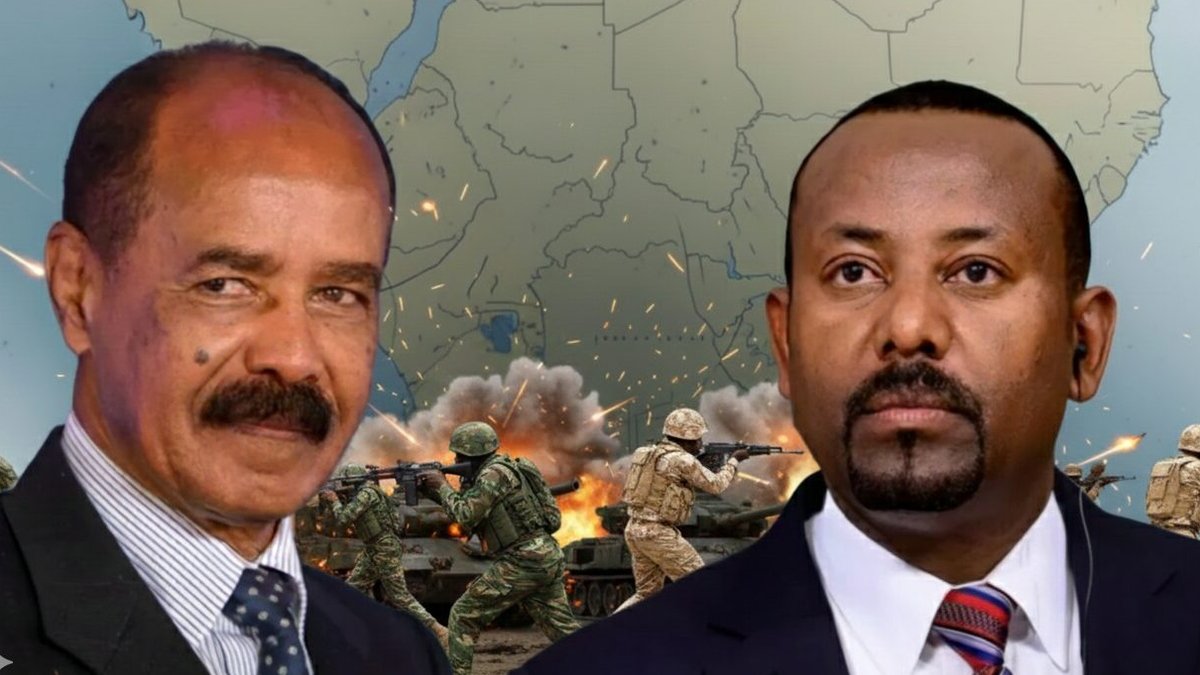
The Ethiopia–Eritrea conflict has long been a defining standoff in the Horn of Africa, a region home to over 160 million people. Rooted in colonial boundaries and fueled by ideology, nationalism, and geopolitics, this rivalry continues to shape the destinies of both nations and the power relations in the Red Sea corridor. By 2025, tensions resurfaced, reminding the world that the rift between Addis Ababa and Asmara remains unresolved.
From Federation to Separation: The Roots of Conflict
After World War II, the United Nations federated Eritrea with Ethiopia in 1952, aiming to grant Eritrea autonomy while preserving Ethiopia’s integrity. However, Emperor Haile Selassie annexed Eritrea in 1962, dissolving the federation and sparking a 30-year war for independence. This annexation marked the beginning of a protracted struggle, as Eritrea’s aspirations for sovereignty clashed with Ethiopia’s territorial ambitions.
The Eritrean People’s Liberation Front (EPLF), led by Isaias Afwerki, joined forces with the Tigray People’s Liberation Front (TPLF) to fight the Derg, a Marxist regime. By 1991, the Derg was defeated, and Eritrea achieved de facto independence. In 1993, a UN-supervised referendum formalized Eritrea’s sovereignty with a 99.8% vote in favor, marking a key moment in the nation’s history.
Read Also: Africa’s Climate Insurance Gap Spotlighted at Nairobi Forum
The 1998 Border War: Africa’s Deadliest Feud
Despite shared ethnic and linguistic ties, tensions simmered over disputed borders. In 1998, a skirmish over the town of Badme escalated into a full-scale war, claiming over 70,000 lives in two years. Both sides accused the other of aggression, with Ethiopia refusing to accept the Eritrea–Ethiopia Boundary Commission’s (EEBC) 2002 ruling that Badme belonged to Eritrea. This conflict was not merely territorial but deeply tied to national pride and identity, as one former Ethiopian commander later told The New York Times, “We were not fighting for land; we were fighting to maintain our dignity.”
By 2000, Ethiopian forces had invaded deep into Eritrean territory, leading to the signing of the Algiers Agreement, brokered by the Organization of African Unity and the United Nations. Despite this, the impasse persisted, leading to a two-decade “no war, no peace” stalemate, marked by militarized borders and divided families. The United Nations Mission in Ethiopia and Eritrea (UNMEE) was expelled in 2008 after Eritrea alleged bias, further hardening relations.
The 2018 peace agreement, brokered by Prime Minister Abiy Ahmed, reopened borders and restored flights. Abiy’s decision to honor the EEBC ruling earned him the Nobel Peace Prize in 2019. Yet, this peace rested on political expediency rather than genuine reconciliation. The agreement was celebrated globally but lacked the depth needed to address underlying grievances.
Read Also: Fine Spinners Invests $5M in Kenya’s Garment Export Boost
When civil war erupted in Ethiopia’s Tigray region in 2020, Ethiopia and Eritrea became unlikely allies. The Ethiopian National Defense Force (ENDF) and Eritrean Defense Forces (EDF) fought the TPLF, resulting in mass atrocities and an estimated 600,000 deaths. This alliance deepened mutual distrust, with Eritrea accusing Abiy of exploiting its troops for territorial gains, further complicating their relationship.
Ethiopia’s landlocked status has driven its pursuit of Red Sea access, particularly through Eritrea’s Assab port. As a landlocked nation since Eritrea’s independence, Ethiopia depends overwhelmingly on Djibouti for maritime commerce, paying roughly $1.5 billion in port fees annually. Abiy’s 2023 declaration that Ethiopia’s future depends on “sovereign access to the sea” alarmed Asmara, which viewed it as a threat to its sovereignty. This declaration showed Ethiopia’s growing desperation for direct maritime access.
Shifting Alliances and Regional Tensions
Eritrea has strengthened ties with Egypt and Saudi Arabia, while Ethiopia aligns with the UAE and Turkey. These alliances mirror broader Middle East power struggles, reflecting the region’s complex geopolitical trends.
Read Also: Smartphones and Mobile Money Fuel Africa’s Trading Boom
The Human and Economic Toll
Both nations remain among the most militarized globally, with Eritrea’s indefinite national service driving thousands to flee annually. Northern Ethiopia’s border communities face ongoing displacement, hunger, and trauma. The prolonged conflict has created a humanitarian crisis that shows no signs of abating.
The World Bank reports Eritrea’s GDP per capita remains below $600, while 15,000 families separated during the 1998 war remain divided by borders. Villagers in areas like Zalambessa and Bure can see relatives across the border but cannot reunite, symbolizing the enduring human cost of the conflict. These families’ stories highlight the personal tragedies that persist long after the fighting has ceased.


