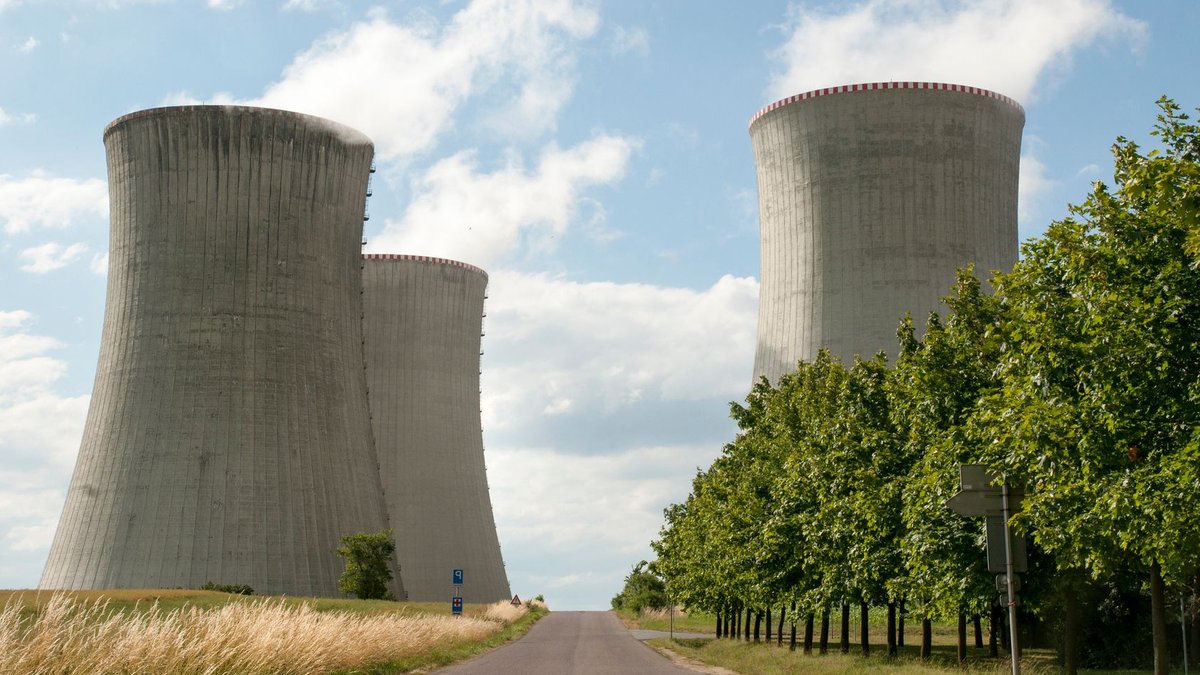
Rwanda has entered the second phase of its nuclear program, backed by the International Atomic Energy Agency (IAEA), with plans to construct a Small Modular Reactor (SMR) in the early 2030s. The government’s push aims to diversify energy sources, enhance food security, and upgrade healthcare infrastructure while meeting growing demand for clean electricity. The IAEA confirmed in May that Rwanda had advanced to Phase 2, allowing construction to proceed. The country has already secured cooperation agreements with Russia’s Rosatom and U.S.-based Holtec International to assist with site evaluations, funding strategies, and safe nuclear technology deployment. These partnerships align with Rwanda’s broader strategy to apply nuclear methods beyond power generation, including in agriculture and medicine.
At the 70th IAEA General Conference in Vienna, Rwanda’s Minister of State for Infrastructure, Armand Zingiro, outlined plans to use nuclear and isotopic techniques for agricultural improvements. Under the Atoms4Food initiative—a joint effort with the IAEA and the Food and Agriculture Organization (FAO)—Rwanda will focus on boosting crop yields, managing pests, and strengthening climate resilience. Zingiro stated that nuclear applications would support food safety, nutrition, and climate adaptation, with the program prioritizing national needs and capacity building. Beyond agriculture, Rwanda is expanding nuclear applications in healthcare. The government intends to strengthen cancer diagnosis and treatment through radiopharmaceutical production and Positron Emission Tomography (PET) imaging. These efforts will modernize medical technologies while adhering to international safety and security standards.
The IAEA’s Integrated Nuclear Infrastructure Review (INIR) missions in March and July 2026 provided critical recommendations for Rwanda’s nuclear program. The assessments emphasized the need to finalize a detailed report for decision-making, update national legislation, and develop policies for nuclear power initiatives. Rwanda has since created an Integrated Work Plan to address these requirements, following the IAEA’s Milestones Approach for nuclear readiness.
Funding remains a key challenge. While SMRs offer cost and deployment advantages over traditional reactors, generating up to 300 megawatts per unit with lower upfront costs, the government is still exploring financing options. The United Nations Economic Commission for Africa (UNECA) is assisting in securing appropriate models, though the IAEA notes that government support is typically essential for early-stage nuclear projects.
Rwanda’s nuclear ambitions extend beyond power generation, but securing the financial and regulatory framework for its first SMR remains the top priority. The country’s mountainous terrain makes SMRs a practical choice, as they can be deployed in remote areas unsuitable for larger plants. However, challenges persist in completing feasibility studies, selecting a site, and developing a skilled workforce. The government has not yet decided whether to finance the reactor through public borrowing, public-private partnerships, or export credit. Comparisons to other African projects, such as Egypt’s El Dabaa Nuclear Power Plant, funded by a Russian state loan, or South Africa’s Koeberg Nuclear Power Station, operated by state-owned Eskom, illustrate the varied approaches to nuclear financing across the continent.
The Atoms4Food initiative will guide Rwanda’s initial steps in applying nuclear techniques to agriculture. The program will concentrate on improving crop yields, managing plant pests, and enhancing soil fertility using isotopic tracers. In healthcare, Rwanda’s nuclear expansion targets two critical gaps: radiopharmaceutical production and advanced imaging. Currently, the country imports most medical isotopes, a costly and logistically difficult process. The IAEA has identified potential sites for a small-scale radiopharmaceutical facility, with technical support from partners. Plans also include prioritizing Positron Emission Tomography (PET) imaging with funding for mobile PET scanners in regional hospitals. These devices, which rely on short-lived isotopes like fluorodeoxyglucose (FDG), will improve early detection of cancers and neurological disorders.
Rwanda’s Butare Cancer Centre of Excellence has expressed interest in hosting a pilot project, pending approval from the Rwanda Atomic Energy Board (RAEB). The IAEA’s Nuclear Medicine Section is assisting in drafting safety protocols to align with the Joint Convention on the Safety of Spent Fuel Management. Regulatory challenges remain the most pressing obstacle for Rwanda’s nuclear healthcare ambitions.
The RAEB, established in 2022, is still finalizing its licensing framework for medical isotope producers and radiation protection standards. The 2026 IAEA missions recommended strengthening the RAEB’s enforcement capabilities, particularly for inspecting facilities handling radioactive materials. Rwanda has revised its Radiation Protection Act to include penalties for non-compliance, though full implementation will require additional training for inspectors and legal officials. The government has also committed to expanding nuclear education to meet workforce demands.
In partnership with the African Institute for Mathematical Sciences (AIMS) Rwanda, a Nuclear Science and Technology Center will open, offering degrees in nuclear-related fields. The center will collaborate with universities in Russia, the U.S., and France to develop tailored curricula. Meanwhile, the RAEB has launched a nuclear internship program, placing students with Rosatom and Holtec to gain hands-on experience in reactor operations and safety protocols. Site selection for the first SMR is advancing slowly due to environmental and geological assessments. The RAEB has shortlisted three locations in Western and Southern Provinces, where terrain and water availability meet SMR requirements. Each site presents unique challenges: one faces seismic risks, while another requires significant infrastructure upgrades to connect to the national grid.
The IAEA’s Environmental Modelling for Site Evaluation (ENVIS) tool is being used to assess radiological impacts, though final approval depends on public consultations scheduled for late 2027. Rwanda’s nuclear timeline now depends on two key deadlines: completing the Integrated Work Plan by mid-2027 and selecting a primary funding model by early 2028. The government has expressed openness to blended finance approaches, combining African Development Bank loans with private sector investments from Holtec or Rosatom. However, without a clear revenue model, such as a 25-year power purchase agreement, international lenders have shown caution. The RAEB’s latest report estimates that even with SMR efficiencies, the project’s total cost could exceed $1.2 billion, necessitating innovative financing beyond traditional sovereign borrowing.


