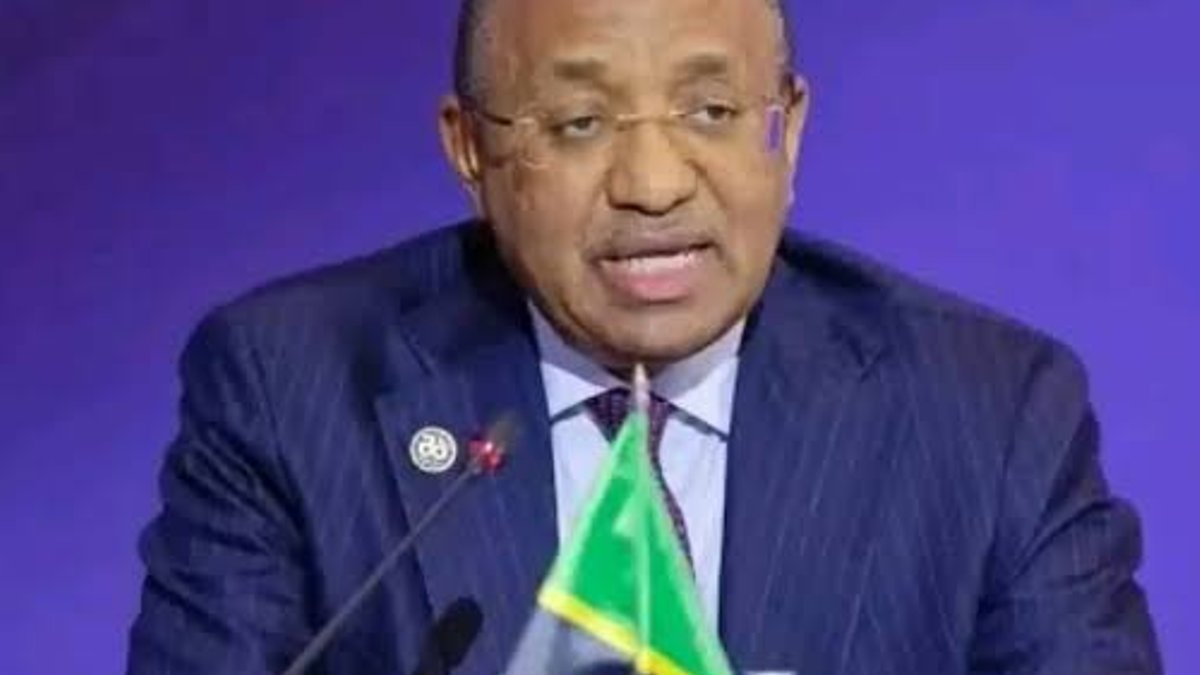
Leaders of Tanzania and Serbia met in Belgrade this week to revive bilateral trade that has slipped in recent years, signing a pact to create a Joint Economic Commission and explore direct air links.
Joint commission and air service plans
The heads of state agreed that a Joint Economic Commission will oversee new projects, while officials from Air Tanzania and Air Serbia began talks on passenger and cargo routes that could cut travel time between the two capitals.
The agreement was signed during the Serbia–Tanzania Business Forum, held ahead of the 65th anniversary of the First Conference of the Non-Aligned Movement in Belgrade.
President Dr. Hussein Ali Mwinyi told reporters, “Tanzania will continue to strengthen its relations and cooperation with the Republic of Serbia… opportunities abound in trade and investment, agriculture, tourism and the Blue Economy.”
He added that direct flights are essential for boosting trade and tourism, and noted Serbia’s decision to open a permanent embassy in Tanzania, with land already set aside in Dodoma for the mission.
President Aleksandar Vučić reaffirmed Serbia’s readiness to deepen cooperation, saying his government is preparing several project proposals aimed at expanding bilateral ties.
Serbian Vice President of the Chamber of Commerce Mihailo Vesović highlighted Tanzania’s strategic location and a population of around 70 million, saying the market offers opportunities far beyond tourism.
Trade figures show widening gap
According to the Observatory of Economic Complexity, Serbia’s exports to Tanzania reached USD 493,000 in 2024, up from USD 329,000 in 2019, driven mainly by rolled tobacco, animal feed and furniture.
During the same period, Tanzania’s exports to Serbia fell to USD 466,000, down from USD 1.87 million in 2019, with sowing seeds, raw tobacco and tropical fruits accounting for the bulk of shipments.
Read Also: Zambia leverages stability and minerals to boost trade
The decline represents an annualized drop of 24.3 percent, while Serbian exports have risen at 8.45 percent per year, highlighting the asymmetry in the trade relationship.
Foreign ministers from both sides met on the sidelines of the heads-of-state gathering, discussing ways to avoid double taxation, streamline permits and improve financing for joint ventures.
They also agreed to support Tanzania’s shift from raw-material exports toward value-added manufacturing, including agricultural machinery, specialized seeds and higher-tech food processing.
Cooperation in information and communications technology was on the agenda, with Serbia offering expertise in software development, artificial intelligence and cybersecurity to help Tanzania expand its digital economy.
Negotiations are ongoing to establish direct air services between the two countries.
Institutional frameworks and future missions
Following the heads-of-state meeting, Tanzania’s Foreign Minister Mahmoud Thabit Kombo and Serbia’s Marko Đurić signed the protocol establishing the Joint Economic Commission. The commission will coordinate trade facilitation, monitor project implementation, and report progress to both governments.
Both sides formalized an agreement to organize a Serbian business mission to Tanzania later this year. The delegation, comprising more than 20 companies, will explore investment opportunities in manufacturing, logistics, and the pharmaceutical sector.
Sectoral priorities and digital cooperation
Serbian officials highlighted Tanzania’s role as a gateway to a regional market of over 300 million consumers and an African market exceeding 1.5 billion people. They urged investors to view Zanzibar and mainland Tanzania as complementary components of a single value chain.
Economic complexity rankings place Serbia at 35 and Tanzania at 119, reflecting differing capacities for sophisticated production. Serbia’s total exports amount to roughly $34.8 billion, while Tanzania’s total exports are about $11.9 billion.
