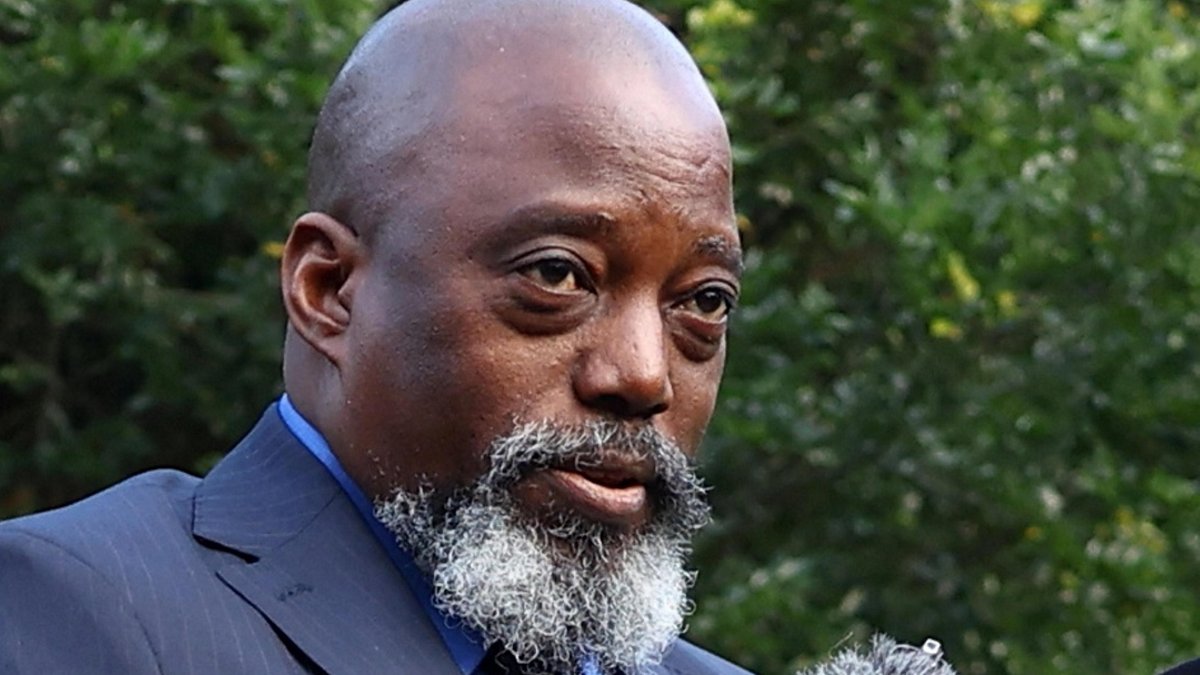
In a significant development, Joseph Kabila, the Democratic Republic of Congo’s (DRC) former leader, has officially assumed leadership of a rebel alliance in the mineral-rich eastern region, aligning himself with the M23 group, which has alleged ties to Rwanda. This move intensifies the challenge to President Félix Tshisekedi, whose final constitutional term concludes in 2028.
After nearly two decades in power, Kabila has emerged from behind-the-scenes allegations to openly lead a new political-military alliance, incorporating the M23 rebellion. The Front pour la Refondation de la Nation (FRN) was introduced during a press conference at his Goma residence, the largest city in the resource-rich east, which has been under rebel control since early 2025.
Formation of the FRN
Kabila now heads the group, with senior members from the disbanded Alliance Fleuve Congo (AFC) and M23 serving as deputies. The organization vows to end “tyranny” in Congo “by all means, including force.” This announcement provides the clearest evidence to date of Kabila’s direct role in the insurgency.
Claude Ibalanky, a coalition adviser, presented the FRN as a vehicle to “unite and coordinate all resistance forces” and to “pool their strengths, resources and means.” Corneille Nangaa, the former electoral commission chief who led the AFC, and Bertrand Bisimwa, a prominent M23 political figure, have been appointed as vice-presidents.
Read Also: Rwanda advances nuclear plans for energy, food and healthcare
Leadership and Structure
Sultani Makenga, the long-standing M23 military leader, serves as a deputy while maintaining operational command of the armed wing, sometimes referred to as the Congolese Revolutionary Army. Freddy Kaniki assumes the role of secretary-general. The founding declaration officially dissolves the AFC.
Goma and Bukavu, the primary capitals of North and South Kivu provinces, remain under rebel control. The M23, widely reported by the United Nations and Western governments to receive support from Rwanda—a charge Kigali rejects—seized large tracts of the east in a rapid 2025 offensive.
Regional and International Implications
Kabila’s journey has come full circle. He began his public career as a young officer in the Rwandan- and Ugandan-backed rebellion that ousted Mobutu Sese Seko in 1997, under his father, Laurent-Désiré Kabila. He assumed the presidency in 2001, handled years of conflict, and oversaw the formal conclusion of the Second Congo War before governing until 2019.
During his tenure, Congolese forces, supported by a UN intervention brigade, defeated an earlier version of the rebels in 2013, forcing Makenga and others into exile. These same commanders now serve under Kabila.
Read Also: Standard Bank, AfDB Launch $332M Social Bond for SMEs
Kabila, now 55, brings the prestige of a former head of state and the networks of the party and security apparatus he once controlled, enhancing the coalition’s political influence.
Kinshasa has yet to officially respond to the Goma announcement. Analysts highlight that a former president leading a territorial rebellion increases the political cost of any purely military solution and complicates external mediation efforts.
UN experts, in mid-2026 reports, had already predicted a restructuring that would raise Kabila, a forecast now realized with the FRN’s formation.
The key question remains whether the new coalition can transform eastern control into national influence or simply deepen the country’s division.