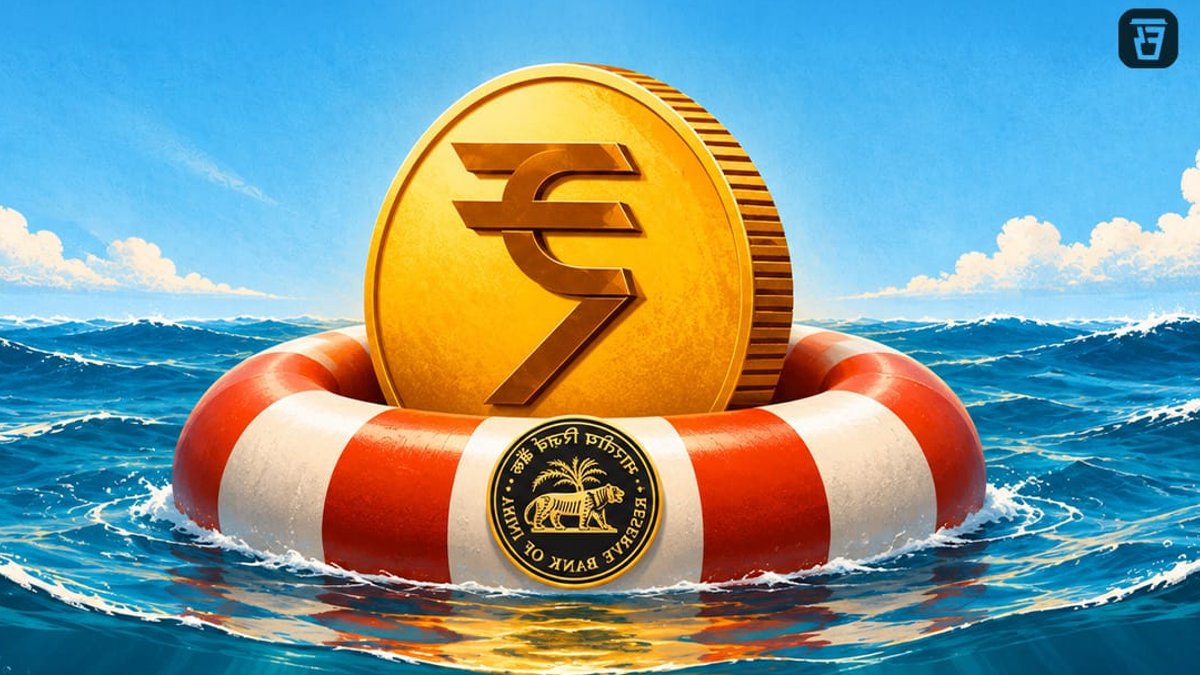
The Indian rupee faced significant pressure against the US dollar throughout 2026, reaching a record low of around ₹96 in March. It nearly revisited this level last month before recovering to ₹93.63, its strongest position in six months.
While the Reserve Bank of India’s efforts appear successful at first glance, understanding the rupee’s true stability requires looking beyond its exchange rate. The underlying factors driving its movement need examination.
The Real Effective Exchange Rate
The rupee’s value against the dollar alone doesn’t reflect its competitiveness globally. The Real Effective Exchange Rate (REER) provides a more full view. This metric compares the rupee against a basket of trading partners’ currencies, adjusted for inflation.
Easing Pressure on the Rupee
There are signs of easing pressure on the rupee. India’s merchandise exports have shown double-digit growth for six consecutive months. In September, exports surged by 23% year-on-year, exceeding $44 billion, while import growth remained lower.
This trend narrowed the merchandise trade deficit to $30 billion, down from $33 billion in September of the previous year. Foreign Portfolio Investment (FPI) into India has also shown improvement.
Foreign investors had withdrawn over $30 billion from Indian equities by October 2026. However, November saw a reversal, with foreign investors purchasing nearly $6 billion worth of Indian equities in just 10 days.
When foreign investors invest in India, they convert dollars into rupees, increasing dollar supply in the market and supporting the INR.
The RBI has also contributed to easing pressure on the rupee. In October, it established a special dollar window for Indian Oil Corporation, Hindustan Petroleum, and Bharat Petroleum.
Through this arrangement, the RBI meets their entire dollar requirements, removing this demand from the regular interbank forex market. This reduces USD demand in the spot market.
Additionally, the RBI raised repo rates, introduced a Foreign Exchange Risk Reserve, and launched a USD-INR currency swap facility, providing banks with rupee funds for lending.
These measures collectively alleviated immediate pressure on the currency. However, the RBI can only influence dollar supply and demand within India. It cannot control the dollar’s global attractiveness.
Global factors are making the dollar increasingly attractive. The US dollar has been strengthening, with the US Dollar Index (DXY) reaching its highest level in around 18 months.
India’s trade deficit remains a concern, with imports in October widening the merchandise trade deficit to $39.88 billion. The country’s reliance on imported energy is a vulnerability that currency-market intervention alone cannot address.
To reduce dependence on foreign savings, India must enhance its competitiveness in manufacturing and exporting. This entails improving infrastructure, streamlining regulations, and facilitating domestic businesses’ integration into global supply chains.
Over time, these measures can increase India’s dollar earnings through exports, ultimately determining the sustainability of the rupee’s recovery.
Long-Term Solutions for Rupee Stability
India’s efforts to stabilize the rupee involve addressing its trade deficit and reducing reliance on imported energy. The country’s vulnerability to oil imports highlights the need for a more competitive manufacturing and exporting sector. India already has an excellent services export sector and a substantial remittance base. But it needs to complement these strengths with a more competitive manufacturing ecosystem.


