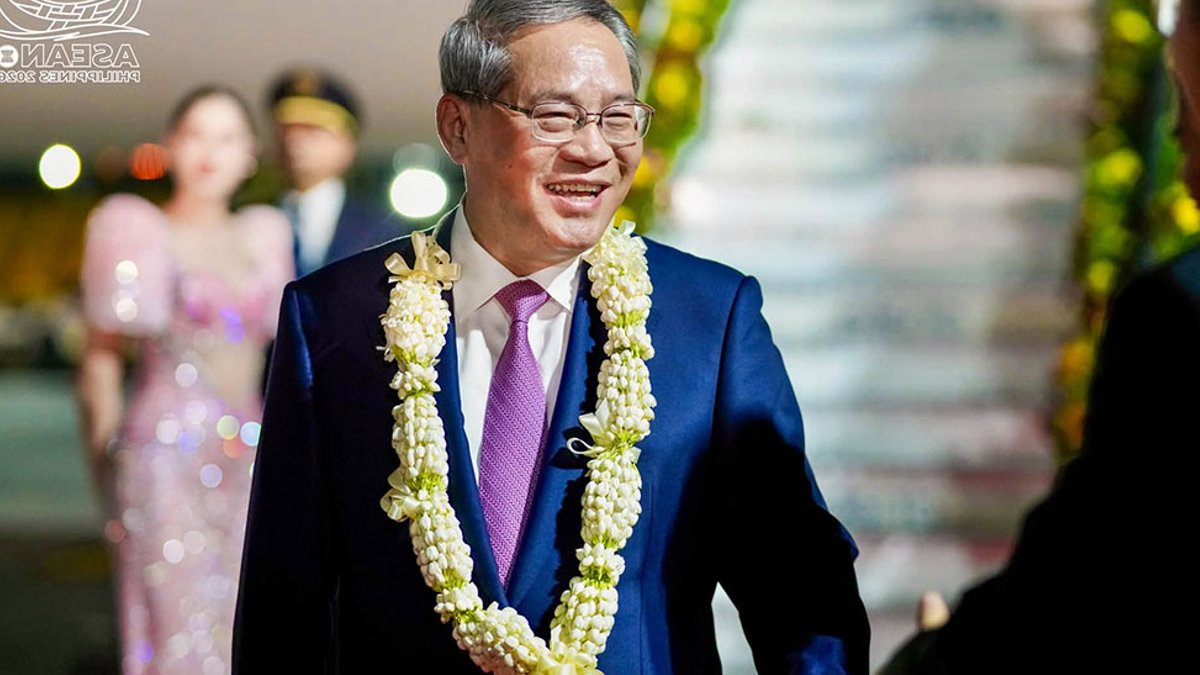
During a regional summit in Manila, Chinese Premier Li Qiang highlighted the “truly extraordinary” progress China and Southeast Asia have made despite worldwide trade barriers, reaffirming Beijing’s dedication to open markets just before U.S. President Donald Trump’s visit.
At the Association of Southeast Asian Nations (ASEAN) summit in Manila, Mr. Li said economic relations between China and ASEAN had strengthened despite growing unilateralism and protectionism. He cited annual trade with the bloc last year of more than $1 trillion and cumulative two-way investment of more than $500 billion.
China-ASEAN Economic Ties
China is ASEAN’s biggest trading partner and a key source of investment. The bloc has a combined GDP of more than $3.9 trillion. Mr. Li said China remains firmly committed to safeguarding multilateralism and promoting free trade.
He emphasized the importance of China and ASEAN standing united and working together in today’s turbulent world. According to a readout by state news agency Xinhua, Mr. Li said they should work together to make the pie bigger and ward off interference.
Trump’s Upcoming Visit
US President Donald Trump is due to arrive in Manila on Tuesday, where he will meet ASEAN leaders and attend his first meeting of the Quad group of Indo-Pacific powers. The Quad includes the US, Japan, Australia, and India, and is considered a counterweight to China’s growing influence in the region.
Mr. Trump‘s visit is expected to be met with protests, following four days of demonstrations by leftist groups, students, and workers. They are demanding an end to the war in the Middle East and the scrapping of the US-led Pax Silica initiative.
Japanese Prime Minister Sanae Takaichi said she would promote Japan’s efforts to strengthen a free and open Indo-Pacific during her talks with ASEAN leaders. ASEAN is a central part of this effort, and the 11-member bloc is due to hold talks with the leaders of Australia, South Korea, the United Nations, and Japan.
ASEAN Leaders’ Summit
The ASEAN leaders’ summit ended on Sunday without completing a protracted code of conduct with Beijing to manage simmering disputes over the South China Sea. The leaders also resolved to continue ASEAN’s policy of excluding the leaders of war-torn Myanmar from its summits.
However, they left the door open for a return if sustained and concrete progress on a peace plan agreed with ASEAN after a coup five years ago can be demonstrated. The meeting also saw an apology from Indonesian President Prabowo Subianto to neighboring Singapore and Malaysia over the impact of sustained transboundary haze from forest and peatland fires.