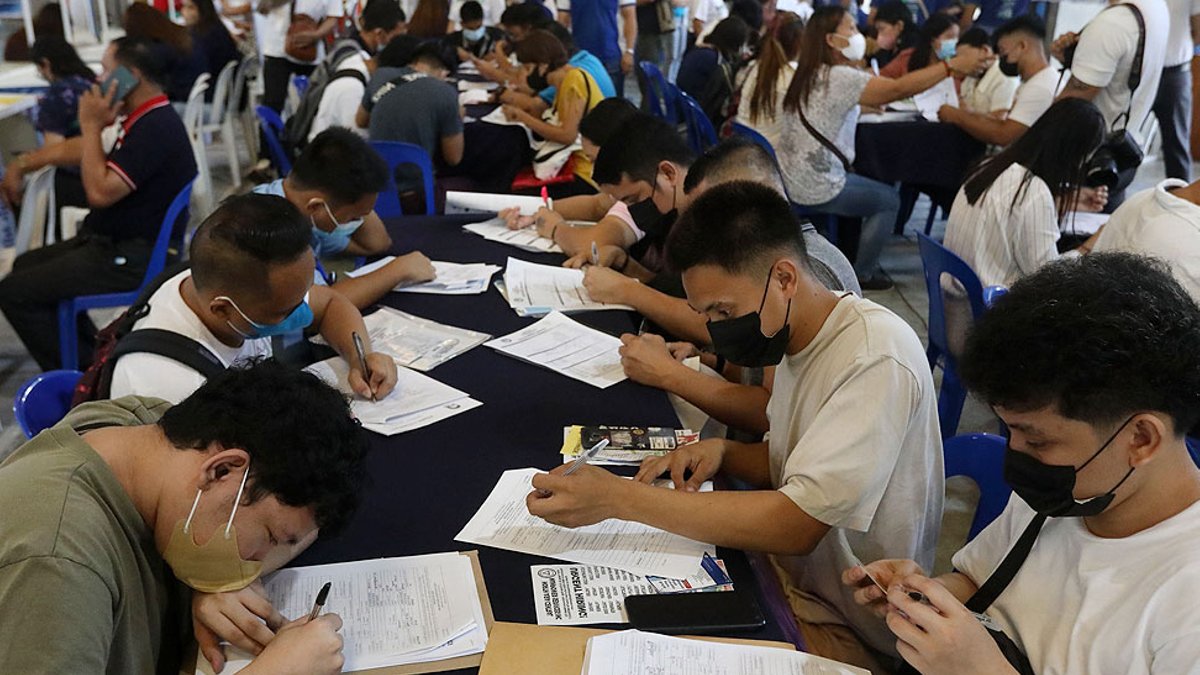
The latest labor report shows Philippine unemployment rose to 5.4% in September, up from 3.8% a year earlier and 5.3% in August. The number of jobless workers increased to 2.86 million, up from 1.96 million a year ago.
Labor force expands amid modest job growth
The labor force reached 53.19 million in September, compared with 51.56 million a year earlier and 52.56 million the month before. Participation climbed to 64.5%, slightly higher than the 64% recorded in August.
Employment rose to 50.32 million, up from 49.6 million a year earlier and 49.79 million in August. The employment rate slipped to 94.6%, down from 96.2% a year ago and just below the 94.7% seen in August.
National Statistician and Civil Registrar General Claire Dennis S. Mapa noted that the largest age group joining the labor market were those aged 15-24, adding 988,000 workers. The 35-44 bracket contributed 451,000, and the 45-54 group added 433,000.
The official also observed that more men entered the labor market this September compared with the same period last year.
Read Also: France to deploy police amid nationwide protests and strikes
Underemployment eased to 11% in September, down from 11.1% a year earlier and 11.9% in August. About 5.56 million workers reported wanting additional hours or another job.
Among the underemployed, 61.4% worked fewer than 40 hours a week, while 38.6% logged 40 hours or more but still sought extra work or income.
The service sector remained the largest employer, accounting for 62.2% of all jobs. Agriculture provided 20.7% and industry 17.1% of employment.
Wholesale and retail trade, together with motor vehicle repair, held the biggest share of jobs at 19.9%. Agriculture and forestry followed at 17.9%, and construction contributed 9.3%.
Accommodation and food services posted the strongest year-on-year gain, adding 834,000 jobs. Transportation and storage added 254,000, while agriculture, public administration, defense, and other services also grew.
Read Also: PLDT Home launches all-in-one digital bundle
Construction saw the largest decline, shedding 271,000 positions. Arts, entertainment and recreation lost 163,000 jobs, and declines were also recorded in information and communication, wholesale and retail, and professional services.
The statistician explained that public construction slowed and material costs rose, with prices up about 5.5%. They said higher costs for building materials and reduced government projects contributed to the drop in construction employment.
On a month-to-month basis, wholesale and retail trade led job creation with an increase of 546,000 positions, followed by accommodation and food services, public administration, manufacturing, and fishing and aquaculture.
Wage and salary workers made up 63% of total employment. Self-employed individuals without paid staff accounted for 28.1%, and unpaid family workers represented 7.3%.
Younger workers entered the market in larger numbers. The participation rate for those aged 15-24 rose to 34.1% from 31.6% a year earlier, and youth employment reached 6.23 million. About 715,000 young workers were underemployed, giving an underemployment rate of 11.5%.

