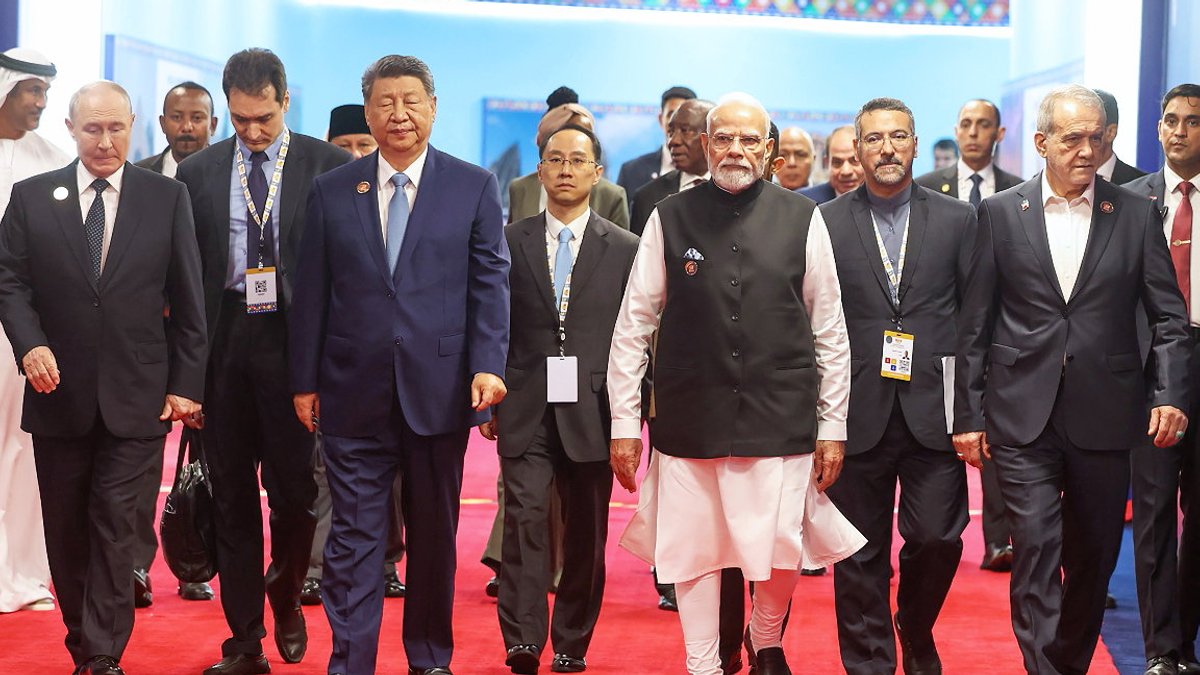
The BRICS alliance is evolving into a development-focused institution for Southern nations, though its actual impact remains uncertain. While attention has centered on the group’s New Delhi Declaration from its 18th summit—particularly its calls for UN Security Council reforms and geopolitical commentary, its broader focus lies elsewhere. The document instead establishes a framework for global development, addressing energy, food security, finance, and industrial expansion. This reflects a deliberate shift under India’s leadership, positioning BRICS as an alternative to existing economic structures.
The New Development Bank has already expanded local-currency lending, and the group’s membership expansion signals an effort to broaden its reach. Additional proposals include a multilateral guarantee mechanism to cut borrowing costs for developing economies and a grain exchange to protect vulnerable nations from food price volatility. A strategic plan for global supply chains also aims to help smaller economies transition from low-value production to higher-value industrial roles. These initiatives could provide critical support as global economic fragmentation and coercive practices intensify.
The New Delhi Declaration, however, relies on non-binding language, with phrases like encourage and welcome dominating its commitments. Most projects lack deadlines, funding allocations, or enforcement mechanisms. While BRICS has established working groups and centers of excellence, there is no system to track progress or enforce accountability. This pattern mirrors past struggles of Southern-led coalitions, where ambitious declarations often failed to translate into action. To address this, the group would need three key improvements: dedicated funding beyond voluntary contributions, a focus on core projects instead of scattered efforts, and transparent outcome monitoring.
The alliance currently functions as a conceptual framework without the operational tools to back it up. Its potential as a counterbalance to Western-led institutions is real, but success will hinge on concrete achievements, such as measurable supply chain integration by 2030, lower borrowing costs for members, or operational grain exchange transactions. Without such progress, BRICS risks remaining a theoretical construct rather than a functional alternative.
The New Development Bank stands as the group’s most functional institution, though its influence is constrained by limited scale. Other proposals, including the grain exchange, remain at the conceptual stage without operational frameworks. Until these gaps are addressed, BRICS will face challenges in demonstrating real-world effectiveness beyond declarations.

