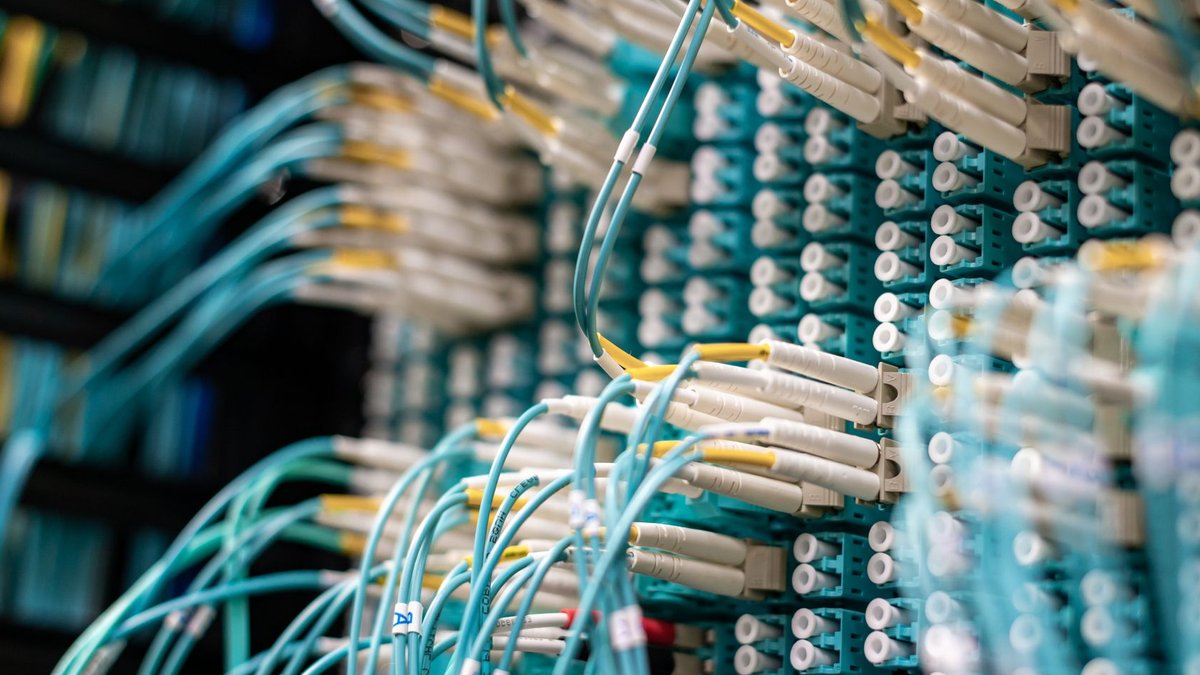
Microsoft and other technology companies are pressing the Trump administration to drop plans for blocking imports of Chinese-made optical transceivers, which are essential for high-speed data transfer in AI-powered data centers. This appeal follows the White House’s consideration of an import ban due to national security risks, including potential data theft or sabotage by Chinese actors.
The proposed restriction applies to new optical transceiver models—components that enable near-light-speed data transmission over fiber-optic cables inside data centers. A Reuters report from August warned that officials suspect these parts could allow Chinese entities to extract data, introduce malware, or disrupt U.S. infrastructure. The Federal Communications Commission, which oversees telecom supply chains, is leading the review, though no final decision has been made.
Microsoft currently has 35 data centers under construction in the U.S. and plans to build another 134, according to Cleanview, a market intelligence firm. The company is part of a coalition, alongside trade groups like the Information Technology Industry Council (ITI), that argues a ban would slow the expansion of U.S. AI infrastructure. Discussions with White House officials revealed that supply chain disruptions could leave newly installed AI chips inactive.
John Miller, ITI’s executive vice president of policy, described the potential ban as “It really threatens to arguably grind (the data center rollout) to a halt.” He explained that cloud providers have already purchased AI chips but lack the necessary transceivers to connect them. Without these parts, servers and networking equipment would remain disconnected, delaying large-scale AI training and deployment.
The industry’s concerns reflect broader challenges, including the growing demand for cloud and AI services alongside criticism over their environmental impact. Data centers already face scrutiny for energy and water use, and a supply shortage could worsen delays in meeting that demand.
Related Post: Trump administration clashes with Ford over China ties
China controls two-thirds of the global optical transceiver market, according to Counterpoint Research. Companies like Eoptolink and Zhongji Innolight, the latter identified by the Pentagon as military-linked, supply major U.S. hyperscalers. Domestic alternatives, such as Coherent and Lumentum, cannot quickly replace Chinese suppliers, according to the Foundation for American Innovation.
The House Select Committee on China, led by Republican John Moolenaar, argued in a social media post that allowing Zhongji Innolight to connect U.S. data centers poses unacceptable security threats. The committee urged the FCC to proceed with blacklisting new Chinese-linked transceivers, framing the move as necessary for national security.
Morgan Stanley suggested in an October research note that targeting only high-speed transceivers, those capable of handling 3.2 terabits per second, could reduce resistance. These devices are not expected in mass production until 2028, with widespread adoption projected for 2029. This threshold is under active discussion by the FCC, though no official statement has been released.
In September, a bipartisan group of lawmakers introduced a bill to prohibit federal agencies from using Chinese-made transceivers in sensitive systems. The measure reflects congressional frustration with supply chain vulnerabilities, even as industry groups push for a more gradual approach.
